Dry Pressing in Ceramic Tile Production
Dry pressing is one of the most widely used and reliable methods in ceramic tile manufacturing. It defines not only the shape of the tile, but also its density, surface structure, and production consistency.
In this process, ceramic powders in granular form are compacted inside steel moulds under high pressure, creating a dense and stable body that is ready for firing.
How Dry Pressing Works
The process begins with the preparation of raw materials such as clay, feldspar, and silica. These materials are milled into a homogeneous mixture and then converted into spray-dried granules with controlled moisture content.
This granular structure is essential for pressing, as it ensures uniform filling of the mould and consistent compaction.
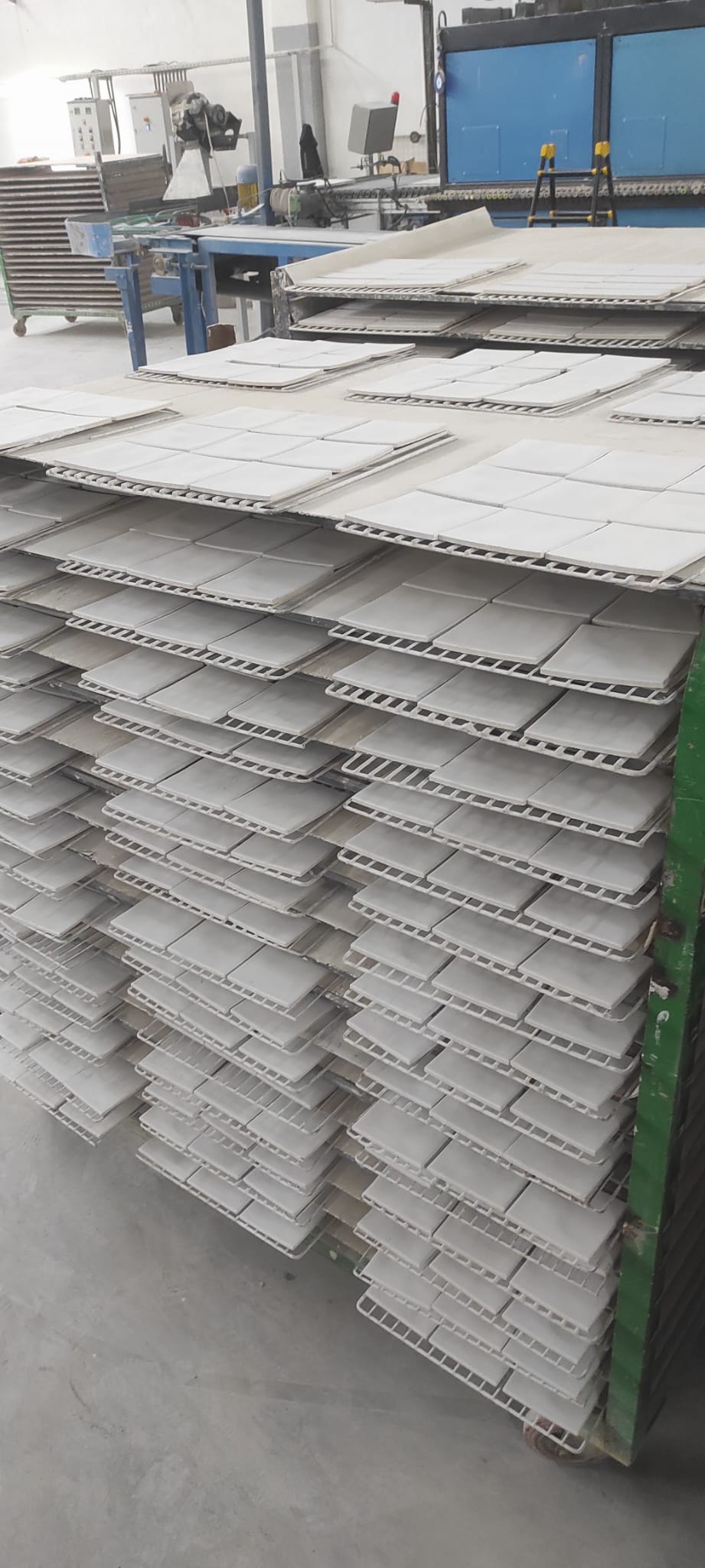
Inside the steel mould, the material is subjected to high pressure (typically 200–400 kg/cm²). This pressure compacts the particles together, forming what is known as the “green body” — the unfired tile.
At this stage, the tile already has its final geometry, including thickness, dimensions, and surface definition.
Surface Definition and Consistency
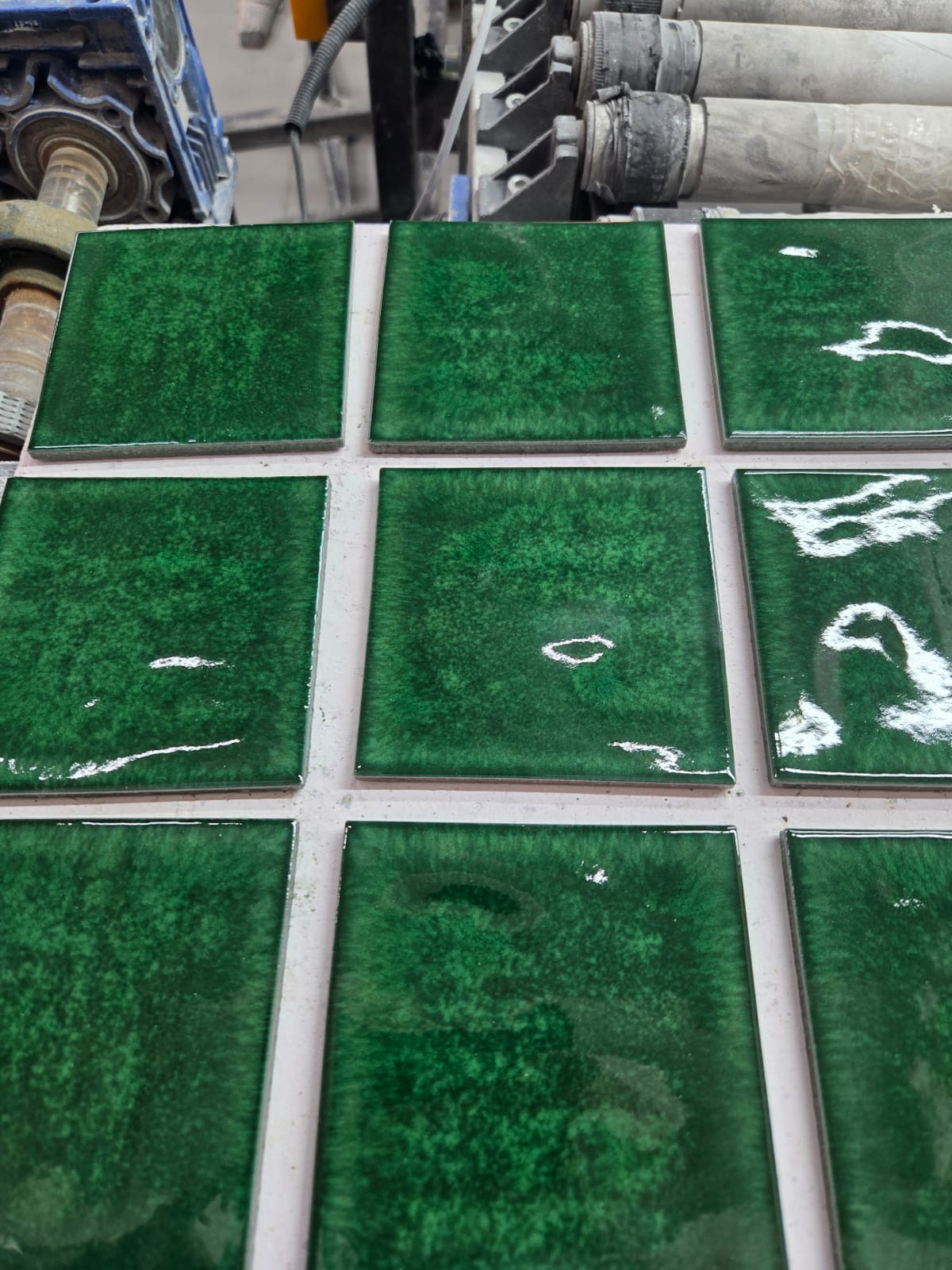
One of the key advantages of dry pressing is that all surface characteristics are defined directly by the mould.
This means:
- Relief depth is consistent across all tiles
- Surface geometry is fully repeatable
- Every piece maintains identical dimensions and texture
Unlike surface-applied techniques, the design is not added later—it is formed during the pressing stage itself.
Firing Process
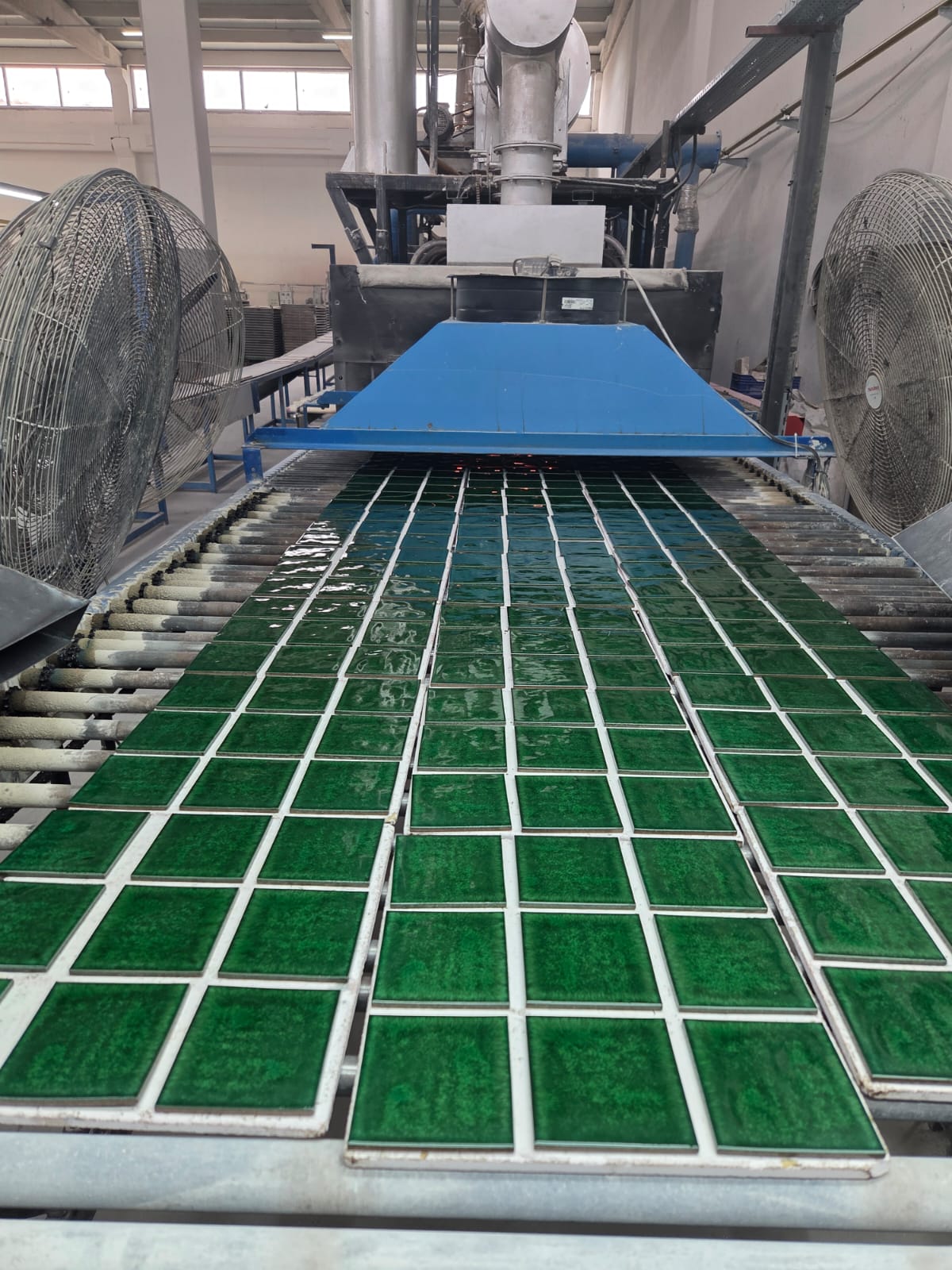
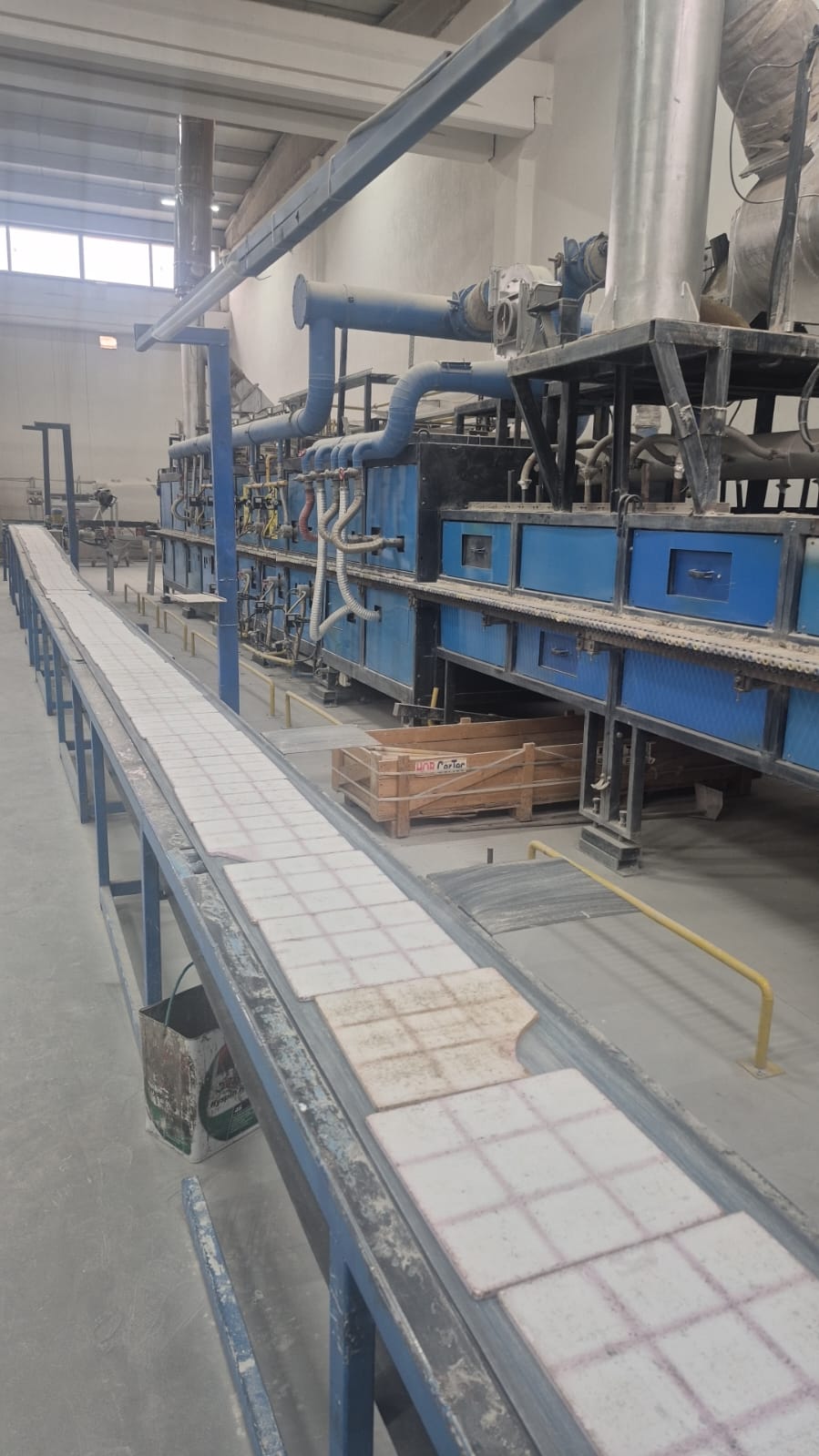
After pressing, tiles are carefully dried to remove residual moisture. They are then fired at high temperatures, typically between 1000°C and 1200°C.
This stage permanently transforms the material, giving it structural strength, durability, and long-term stability.
Why Rectification Matters
After firing, slight dimensional variations may occur due to natural material shrinkage. To ensure precision, tiles undergo a mechanical process called rectification.
Rectification involves cutting all edges of the tile to achieve exact dimensions and sharp, uniform angles.
This process:
- Reduces dimensional tolerance to approx. ±0.5 mm
- Ensures all tiles match in size perfectly
- Creates clean 90° edges for precise installation
It is not a visual treatment, but a technical finishing process that guarantees installation accuracy.
Key Advantages of Dry Pressing
Dry pressing offers three core advantages in ceramic tile production:
- High dimensional accuracy
- Fully repeatable surface geometry
- Strong mechanical performance
Because of this, it is widely used for both smooth and textured (relief) tile designs where precision and consistency are essential.
Dry pressing is not just a forming method—it is a controlled system that defines how ceramic surfaces are created and repeated.
By combining mould-based design, high-pressure compaction, controlled firing, and rectification, it ensures that every tile maintains both technical precision and surface consistency.